The range
Low Calorie Wine: 60 kcal per 100ml, Zero Sugar
Our low calorie wine is 60 kcal per 100ml with 0g sugar and 0g carbs, at a full 11% vol. It comes in red, white, rosé, sparkling white and sparkling rosé, all made in Italy and registered with the Vegan Society.
Shop the range
Five wines, one set of numbers
-

Wine Taster Pack
£32.99 Add to basket -
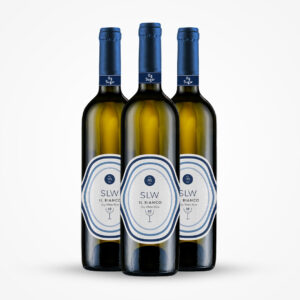
Il Bianco
£31.47 – £113.88Price range: £31.47 through £113.88 Select options This product has multiple variants. The options may be chosen on the product page -
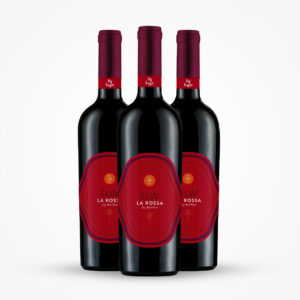
La Rossa
£31.47 – £113.88Price range: £31.47 through £113.88 Select options This product has multiple variants. The options may be chosen on the product page -

Rosé
£32.97 – £119.88Price range: £32.97 through £119.88 Select options This product has multiple variants. The options may be chosen on the product page -

Sparkling White
£38.97 – £131.88Price range: £38.97 through £131.88 Select options This product has multiple variants. The options may be chosen on the product page -

Sparkling Pink
£38.97 – £131.88Price range: £38.97 through £131.88 Select options This product has multiple variants. The options may be chosen on the product page
Alcohol and sugar
What makes a wine low in calories
Two things put calories in wine, and only two. Alcohol, and sugar.
Alcohol carries around 7 calories per gram, which makes it the larger of the two in almost every bottle. Sugar carries 4 calories per gram. Whatever sugar the yeast does not convert during fermentation stays in the bottle as residual sugar, and it lands on both the calorie count and the carbohydrate count.
Most producers chasing a lower calorie wine reduce the alcohol. We did the opposite. We left the alcohol at a full 11% and removed the sugar instead, by fermenting until every gram of natural grape sugar has converted.
The arithmetic works out neatly. Alcohol at 11% vol contributes roughly 61 calories per 100ml on its own. Our wine measures 60 kcal per 100ml. There is nothing else in there.
Wine is one part of it. The same approach runs through the full range of low calorie alcoholic drinks, including the beer, gin and spritz, and every wine here is keto friendly at 0g carbs.
The five styles, compared
| Style | ABV | Sugar | Carbs | kcal / 100ml | kcal / 175ml | kcal / bottle | |
|---|---|---|---|---|---|---|---|
| La Rossa | Red | 11% | 0g | 0g | 60 | 105 | 450 |
| Il Bianco | White | 11% | 0g | 0g | 60 | 105 | 450 |
| Rosé | Rosé | 11% | 0g | 0g | 60 | 105 | 450 |
| Sparkling White | Sparkling | 11% | 0g | 0g | 60 | 105 | 450 |
| Sparkling Pink | Sparkling rosé | 11% | 0g | 0g | 60 | 105 | 450 |
The range
Low calorie red wine
La Rossa is a full bodied dry red from Merlot and Barbera, grown in the Asti hills of Piedmont. Merlot brings the soft dark fruit, Barbera brings the acidity and the structure that stops a zero sugar red tasting hollow.
There is also an Oak Aged Red, matured in barrel after the wine has already reached zero sugar, which adds depth without adding anything to the numbers.
The range
Low calorie white wine
Il Bianco is dry and crisp, made from Sauvignon and Chardonnay. Sauvignon gives it the citrus edge and the aromatics, Chardonnay gives it enough body to carry food.
The Oak Aged White is the same wine held over 100 days in oak. Toasted almond and vanilla over the exotic fruit underneath.
The range
Low calorie rosé wine
Made from the soft pressing of French red grapes, which is what gives it the pale colour rather than any blending. Dry, with strawberry, rose petal and aromatic herbs.
Rosé is where the difference tends to be widest, because a great many commercial rosés carry noticeable residual sugar. Ours carries none.
The range
Low calorie sparkling wine
Sparkling White comes from Chardonnay and Pinot grapes grown in the Prosecco DOCG area of north east Italy, with a fine, persistent perlage. Sparkling Pink is its rosé counterpart.
Sparkling wine is where sugar hides most effectively. Almost all fizz carries a dosage, which is sugar added after the second fermentation. Even a brut can hold up to 12 grams per litre. Ours holds none.
Calories per glass
UK pour sizes make more difference than the wine does. A large glass carries twice what a small one does, from the same bottle.
| Pour | What it is | Calories | Units at 11% |
|---|---|---|---|
| 125ml | Small glass | 75 | 1.4 |
| 175ml | Standard glass | 105 | 1.9 |
| 250ml | Large glass | 150 | 2.8 |
| 750ml | Full bottle | 450 | 8.3 |
If you are counting, the pour size is the lever. Moving from a 250ml glass to a 175ml glass saves more than switching between most wines.
Nothing added, nothing removed
How we reach 0g sugar at full strength
Nothing is added and nothing is taken out. The wine is not de-alcoholised, filtered of its sugar, or sweetened and then corrected.
We use selected yeasts and a longer, cooler fermentation that carries on until every gram of natural grape sugar has been converted into alcohol. Fermentation normally stops short, either because the winemaker halts it to retain sweetness or because the yeast gives up. Ours runs to completion.
That is why the wine is 11% rather than 5%. All the sugar became alcohol. We were the first producer to bring a sugar free wine to the UK, in 2018.
Three more things
Also low sugar, low carb and low sulphite
The same fermentation gives the range a few other properties worth knowing about.
- 0g carbohydrate. Carbs in wine come almost entirely from residual sugar. No sugar means no carbs, which is what makes the range workable on keto, Atkins and low carb plans.
- Around 80% fewer sulphites than most regular wines. Sulphites are added as a preservative and antioxidant, and we need far fewer of them.
- Vegan Society registered. Wine is often clarified with egg, milk or fish derived fining agents. Ours is not.
Cases, taster packs and delivery
The three bottle taster pack is the usual starting point: one red, one white, one sparkling white. After that, most people buy by the case.
Cases come in six and twelve bottles, single style or mixed, and case buying is the lowest price per bottle we offer.
Beer, gin and spritz sit alongside the wine. Browse the full shop to see everything in one place.
Questions
Frequently asked questions
75 calories in a 125ml glass, 105 in a 175ml glass and 150 in a 250ml glass. All five wines are 60 kcal per 100ml, so the style makes no difference. Only the pour size does.
Ours is not. It is a full 11% vol. Most wines marketed on calories get there by reducing alcohol, because alcohol is where most of the calories sit. We removed the sugar instead and left the strength alone.
None of them. All five are identical at 60 kcal per 100ml, because they are all 11% vol with 0g sugar. Choose on taste, not on the number.
It contains 0g carbohydrate per serving, which is why people on ketogenic and low carb diets choose it. If you are following a specific medical plan, check with whoever is supervising it.
It depends entirely on what you compare it to. A dry wine at a similar strength will not be far off. The gap widens against anything sweeter or stronger, and against sparkling wine, where added dosage sugar is standard.
Shop
Start with the three bottle taster pack
One red, one white, one sparkling white. The easiest way to try the range before committing to a case.